

Implant dentistry replaces missing teeth by anchoring new ones to titanium set in the jawbone. It covers four jobs: one tooth, a few in a row, a whole jaw held fixed, or a whole jaw that snaps out. At Pearl32 Dentistry and Wellness in Laguna Hills, all four begin with a 3D cone beam scan.
An implant is not one object. It is three, placed at different times and quoted separately.
That is most of implant dentistry, honestly. The number of fixtures changes and what sits on them changes. The three parts do not.
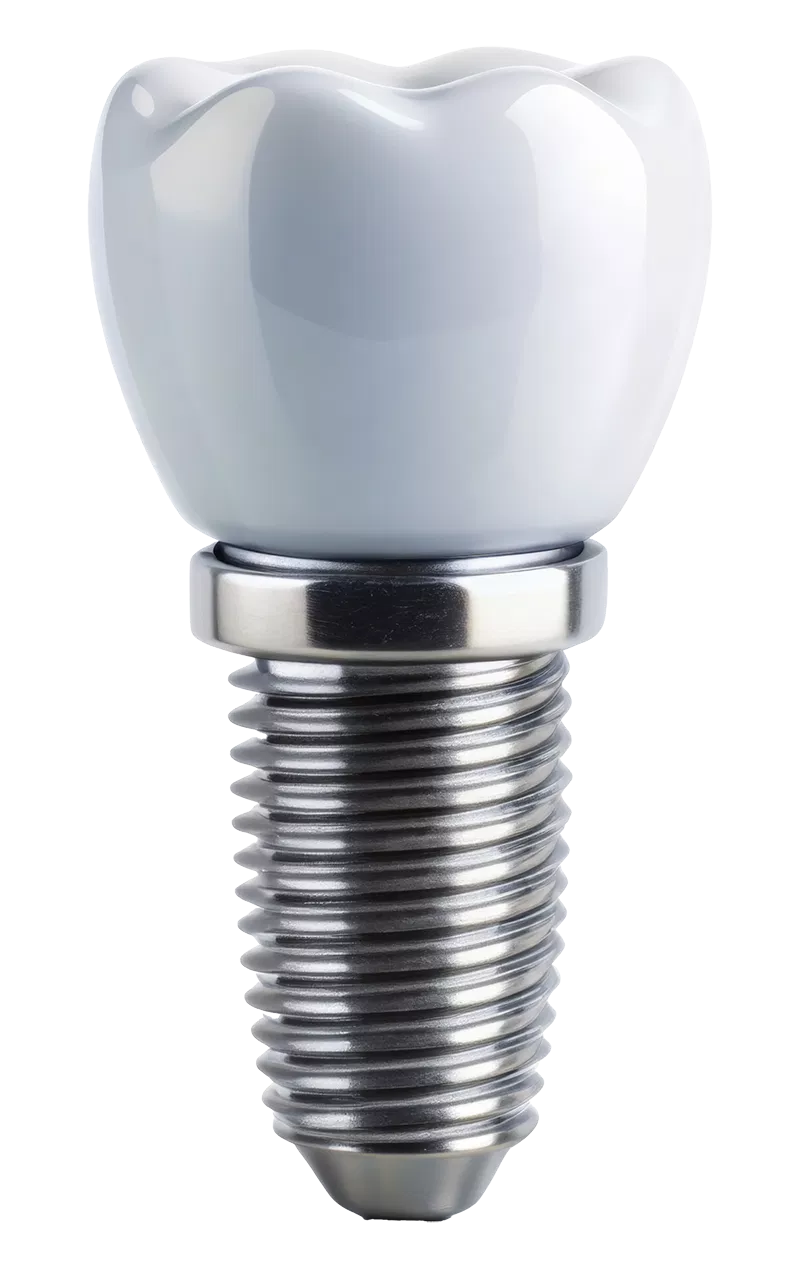
One fixture, one abutment, one crown. The teeth either side are never drilled, the main argument for it over a conventional bridge. The trade is surgery and waiting: four to seven months to the finished crown, longer if the site needs grafting. More on single dental implants.
Two implants can carry three or four teeth between them, so not every gap needs its own fixture. Fewer surgical sites, fewer parts, a smaller fee. The trade is the tooth in the middle. It rests over the gum rather than a root, so you clean under it daily with a threader. The two end sites need solid bone, because they carry the span.
A full bridge is screwed onto four to six implants and stays in. You clean around it, and only a dentist takes it off. It is also the most involved of the four. Any remaining teeth come out, the implants go in at one appointment, and you usually heal on a fixed temporary. The final bridge follows three to six months later. See full arch dental implants.
Two to four implants, and a denture that clips on. You take it out at night and clean it in your hand, which suits anyone whose grip makes flossing hard. Fewer fixtures means a smaller fee and less asked of the bone. The trade is that it is still a denture. An upper one usually covers part of the palate. It moves a little more than a fixed bridge, and the clip inserts wear out and get replaced at reviews.

An implant needs bone in three dimensions: height, width and density. The jaw loses all three once a tooth is gone, fastest in the first year.
When the scan shows there is not enough, there are four answers. We tell you which applies.
Nothing is drilled on the day it is decided. Planning happens first on a 3D cone beam CT. That scan shows bone height, width and density, and where the nerve canal and sinus floor run. We work backward from the tooth. Where the crown must sit decides where the fixture goes. A surgical guide is then made from the plan. It seats over your teeth and directs the drill.
Why bother? The nerve in the lower jaw and the sinus above the upper molars have no give. Placement is done with local anesthetic, and sedation is available. More on the equipment at digital dentistry.
Guided does not mean exact. Khaohoen and colleagues reviewed guided implant placement in BMC Oral Health in 2024. The published review reported a mean deviation of 1.11 mm at the implant head. At the tip it was 1.40 mm. Angle deviation averaged 3.51 degrees. Those are published averages, not a promise about your case. We plan with that margin in mind and leave clearance around the nerve.


Pearl32 Dentistry and Wellness has three general dentists and has been serving the community since 1994. Dr. Nojan Jahedmanesh, DDS, holds a dental degree from Loma Linda University and a certificate in prosthodontics from UCLA. Prosthodontics is the area of dentistry concerned with replacing missing teeth. He practices as a general dentist. Scanning, planning, surgery and finished teeth happen in our Laguna Hills office.

Implants fail more often in some circumstances. None of these is an automatic no.
Age is not on that list. Bone volume, gum health, medications and sitting through appointments decide it. The number of birthdays does not. If your teeth are failing but still there, implants may be the wrong first question: see full mouth reconstruction.
Laguna Woods Village sits about two and a half miles from our door. Its 18,000 residents are all 55 or over. The resident bus stops at our plaza, so a consultation needs no driving and no parking. On a sedation day, arrange a driver. There is free street parking, free spaces behind the building, and lifts up to Suite 450. More on the Laguna Woods dentist page. We also treat patients from Laguna Niguel, Aliso Viejo, Lake Forest and across Orange County.


Nearly all of that is bone healing. These are typical ranges, not dates we can promise.

We will not quote implant work over the phone. The figure depends on how many fixtures, whether the bone needs grafting, and what sits on them. The estimate arrives in writing, itemized stage by stage, with optional items marked optional. Nothing is added later without your agreement.
We take most major PPO plans and Delta Dental HMO. Coverage varies widely, so we send a pre-treatment estimate and show you the insurer’s written answer first. Cherry, CareCredit, Sunbit and Happen Bank all finance implant treatment, subject to credit approval: see our financing page. Without insurance, our membership plans cover routine care, and implant work is quoted separately.
It depends on bone, budget and how much surgery you want. A conventional denture needs no surgery and is the quickest route to teeth. It rests on gum and ridge, so it moves while you eat, and the bone under it keeps shrinking. Implants hold still, and chewing through them slows that shrinking. The trade is cost and months of healing. An overdenture sits between the two.
Guided surgery figures above are from Khaohoen and colleagues, BMC Oral Health, 2024. This page is general information, not a diagnosis. What suits your mouth can only be decided after an examination and a 3D scan. Our hours are on the contact page.
Most single implants take three to six months. The implant is placed in one visit. The bone then needs time to grow around it. The crown is fitted once the implant is solid. If a tooth has to come out first or bone has to be added, allow longer. We give you the timeline in writing before anything starts.
Every implant case starts with a 3D cone beam CT scan taken here in the office. The scan shows bone height, bone width and where the nerve runs. The implant position is planned on that scan before surgery. A digital intraoral scan records the teeth, so there is no tray of impression material.
It depends on the number of implants, whether bone grafting is needed and the type of tooth that goes on top. You get a written, itemized estimate before treatment is scheduled. Financing is available through third party lenders: CareCredit, Cherry, Sunbit and Happen Bank. Pearl32 is not the creditor. See the financing page.
One implant can replace one tooth without touching the teeth next to it. A conventional bridge means cutting down the two neighbors. Read more on the single tooth implant page. If all the teeth in an arch are failing, see full arch implants.
Implants are placed and restored in this office by the same team. Dr. Nojan Jahedmanesh holds a certificate in prosthodontics from UCLA and practices as a general dentist. Some complex surgical cases belong with a specialist. When that is the right call, we will tell you.