

Gum disease is a bacterial infection of the gum and the bone holding your teeth in. Bleeding when you brush is usually the first sign. It is not normal. Caught early it reverses completely. Left alone it takes bone, and bone does not grow back. Pearl32 Dentistry and Wellness treats it in Laguna Hills.
Gum disease is quiet. It rarely hurts until it is advanced, which is why people arrive surprised.
Yes. Healthy gums do not bleed when you brush or floss properly.
Bleeding means the tissue is inflamed, and bacteria along the gum line are inflaming it. Skin elsewhere does not bleed when you wash it. How far it has gone takes a probe and an x-ray, ten minutes.
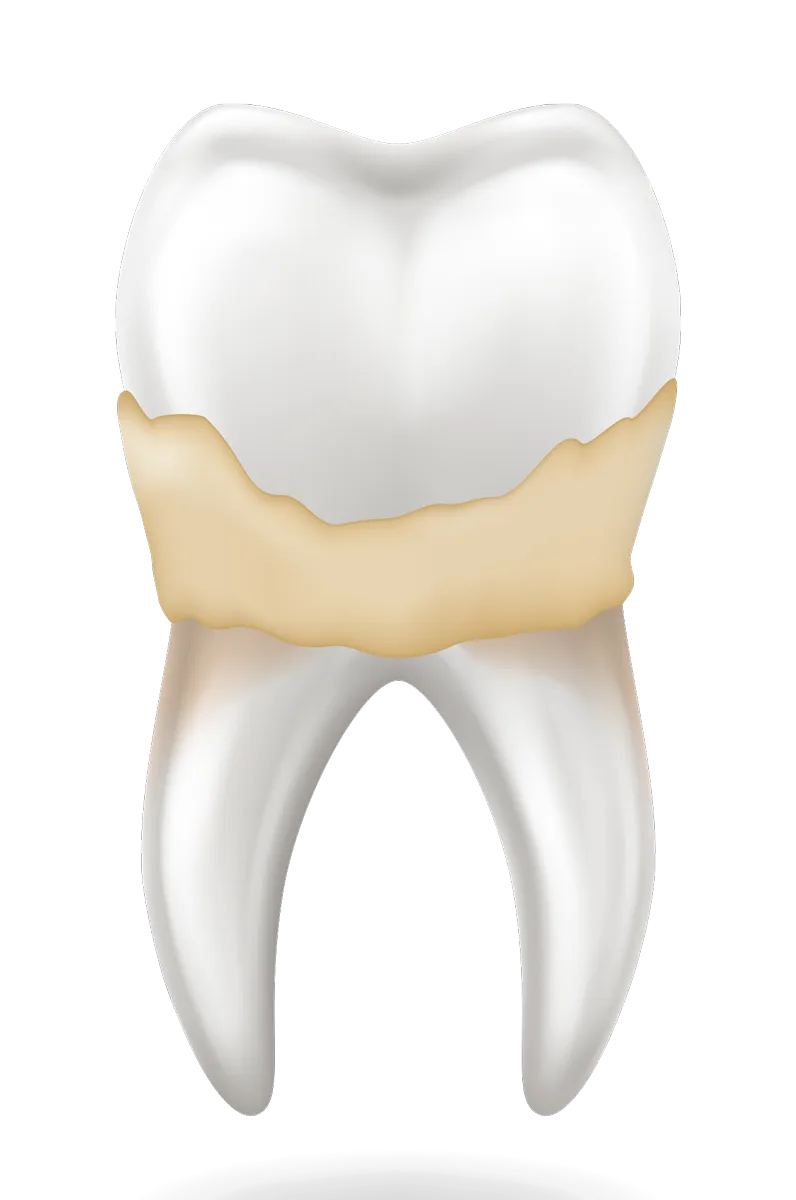
Gingivitis is inflammation of the gum only. Nothing holding the tooth in has been lost.
Clean the plaque off properly and it resolves in about two weeks, with no lasting damage. A routine cleaning and better home technique is the whole treatment. See general dentistry.
Periodontitis is the stage after. The infection has moved below the gum line and bone around the root is dissolving. The gum detaches and a pocket opens. No toothbrush reaches the bottom of one. Treatment does. See gum disease treatment.
A probe marked in millimeters slides between gum and tooth until it stops. That depth is the pocket, read at six points per tooth.
Depth alone decides nothing. Bleeding, recession and looseness go on the chart too. A 3D cone beam CT shows a bone defect in three dimensions.


Sometimes yes and often no. The chart separates the two.
Scaling and root planing, which most people call a deep cleaning, is a diagnosis, not a default. We recommend it when the chart supports it and not otherwise. If the numbers call for a regular cleaning, that is what we book, and we say so.
Scaling and root planing is diagnosed from measured pocket depths and bone levels on an x-ray. Not from how red the gums look. Read how scaling and root planing is done and what follows it.
So at Pearl32 Dentistry and Wellness we read the measurements out loud as they are recorded, with the x-ray on screen beside them. Hearing “three, two, three” around a tooth lands differently from “six, five, six.” You leave knowing what the recommendation rests on.
Ask any dental office for your pocket chart and your x-rays, this one included. A deep cleaning recommendation should be visible on both.
Plaque starts it. This list decides how much damage it does.
Bring your medication list. Patients off the Laguna Woods Village bus often hand over a long one.


Root surfaces are cleaned inside the pockets, below the gum, where a routine cleaning cannot reach. The site is numbed with local anesthetic first.
Most mouths are finished in two visits, half at a time, about an hour each. Most people are comfortable through it. Sedation is available.
Everything is measured again at six to eight weeks. Pockets typically come down one to two millimeters as inflammation settles. That re-measure is the point of the exercise.
Some pockets stay deep, which happens without meaning the cleaning failed. Where a site holds at 6 mm, the choices are a locally placed antimicrobial or referral to a periodontist. Antibiotic tablets are not routine.
After treatment you move to periodontal maintenance every three to four months. Persistent bad breath that survives brushing usually has a gum cause too; see bad breath treatment.
Gingivitis, cured completely. Periodontitis is managed, because lost bone stays lost.
That is the limitation, so here is what we do about it. Pockets are re-measured at every visit and compared with the last set, which turns relapse into a number you can see. In some defect shapes a periodontist can regain part of the bone by grafting, though most cannot. Receding gums can be covered with gum grafting, and a tooth broken close to the gum can be made restorable with crown lengthening.

Because bacteria repopulate a treated pocket in roughly three months. Twice a year is an interval built for healthy mouths, and dropping back to it is where most relapse starts. If the frequency is the obstacle, say so and we will work the cost around it.
Partly. What decides it is the bone between the teeth.
Recession is gum sitting lower on the root than it used to. The tooth looks longer and cold drinks sting. Gum disease causes some of it. So does hard brushing, thin tissue you were born with, and clenching.
It does not grow back on its own, and no toothpaste regrows it. So we remove the cause first: a soft brush, a different technique, a night guard, gum treatment where that drives it. Then we measure and photograph it, because much recession is stable.
Where the bone between the teeth is intact, a gum graft can cover most of the exposed root, and we refer that surgery. Where that bone has gone, full coverage is not achievable. The goals then become halting the recession and treating the sensitivity, which bonded tooth colored material in a worn notch does.
The association is real. The direction of cause is not settled.
People with periodontitis have higher rates of cardiovascular disease in large observational studies. Those studies cannot separate smoking, age and diabetes, which raise both risks at once. No trial has shown that treating gums prevents a heart attack.
The diabetes link runs both ways, and treating gum disease has been associated with small improvements in blood sugar control. Treat your gums to keep your teeth. Any wider benefit is possible rather than promised.
Looseness means support has gone. Whether a tooth is kept depends on how much is left.
Moderate bone loss with a sound root often means keeping the tooth for years on maintenance, sometimes splinted to its neighbors. A split root, or support lost past halfway, is usually better out than defended.
Bone shrinks where a tooth used to be, so a socket graft at removal holds the shape for a later dental implant. Wider options sit under implant dentistry. Gums are treated and stable first, because implants develop their own version of this disease.
Scaling and root planing is a covered benefit on most PPO plans, at a share that varies by plan. Larger work gets a pre-treatment estimate, so the insurer confirms their share in writing.
Pearl32 Dentistry and Wellness accepts Delta Dental, Aetna, Cigna, MetLife, Guardian, Humana, Anthem Blue Cross, Blue Shield, UnitedHealthcare and other major PPO plans, and the Delta Dental, Guardian and MetLife HMO plans (full list). Without insurance, our membership plans cover examinations, x-rays and cleanings for a monthly fee, with a reduction on other treatment. Three tiers, each with a one-time activation fee.
Larger treatment can go through Cherry, CareCredit, Sunbit or Happen Bank, all subject to credit approval. See dental financing.
Street parking is free, and there are free spaces behind the building. The building is wheelchair accessible, with an elevator to Suite 450. The Laguna Woods Village resident bus stops in our plaza. Patients come from Laguna Niguel, Aliso Viejo and Lake Forest, across south Orange County.
Monday to Friday 8 to 5, closed weekends. Dr. Nojan Jahedmanesh, DDS, took his dental degree at Loma Linda University and holds a certificate in prosthodontics from UCLA. He practices as a general dentist. Directions are on the contact page. Serving the community since 1994. Page reviewed September 2026.