

Orthodontics is moving teeth through bone into better positions. The tools are fixed braces and removable trays. Most orthodontic patients at Pearl32 Dentistry and Wellness are adults, and many had braces once already. In our Laguna Hills office that means clear aligners, planned from a digital intraoral scan and made by Candid Pro. We are an authorized Candid Pro provider.
A tooth is not set in bone like a fence post. It hangs in its socket on the periodontal ligament, a layer of fibers a fifth of a millimeter thick.
Steady pressure squeezes that ligament on one side of the root and stretches the other. On the squeezed side, cells called osteoclasts dissolve bone. On the stretched side, osteoblasts build it back. The tooth travels, and the socket rebuilds around it.
That sets the speed: a tooth moves roughly one millimeter a month.
Why not push harder? Heavy force flattens the blood supply inside the ligament. The crushed tissue has to clear before anything moves. Harder is slower, not faster.
Adult bone also turns over more slowly than a teenager’s, so adult cases run long.
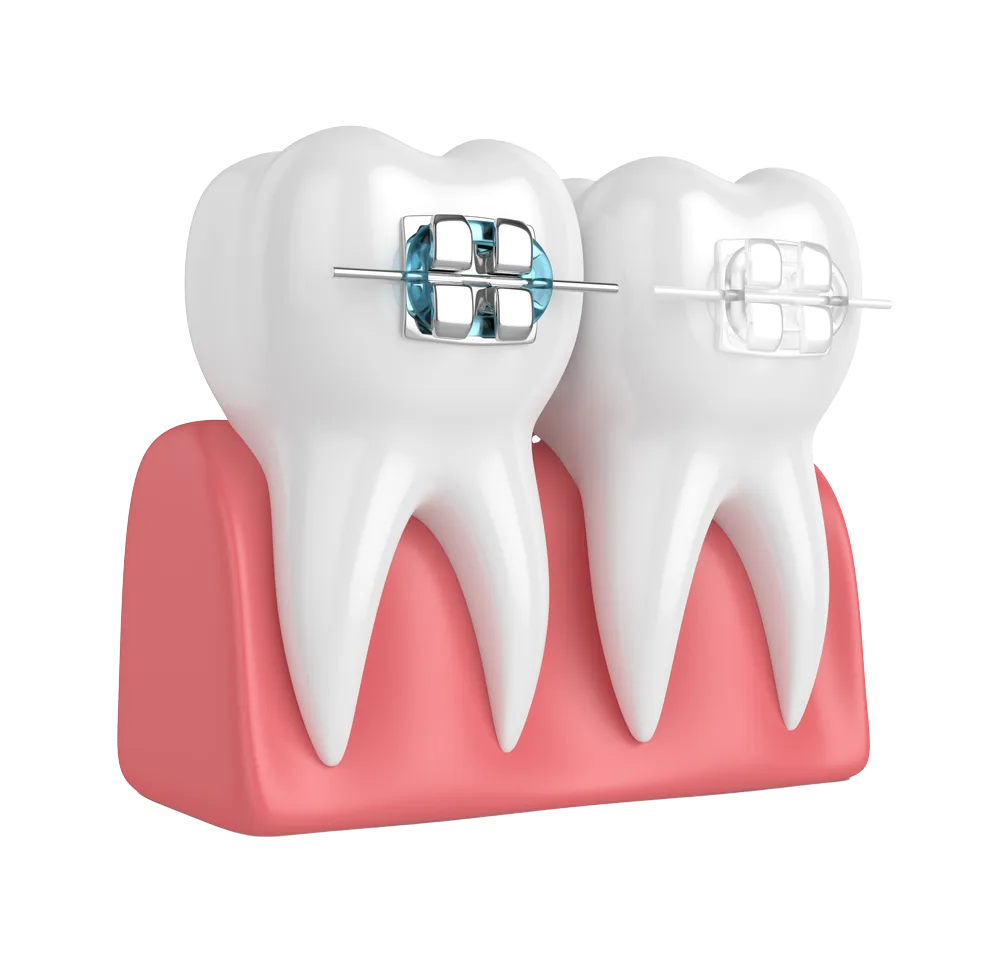
These are different tools, not a good one and a bad one. What decides it: how far the teeth must travel, what kind of movement that is, and whether you will wear something.
A bracket is bonded to each tooth, and a wire shaped to the arch your teeth should finish in pulls them there.
Braces are not removable. They work whether or not you remember them. They also deliver movements a tray struggles with: walking a root across the arch, closing an extraction space, correcting a deep bite.
The costs are real. Braces are visible, and plaque at a bracket edge can leave a permanent white mark. That one is preventable, so cleanings move closer together.
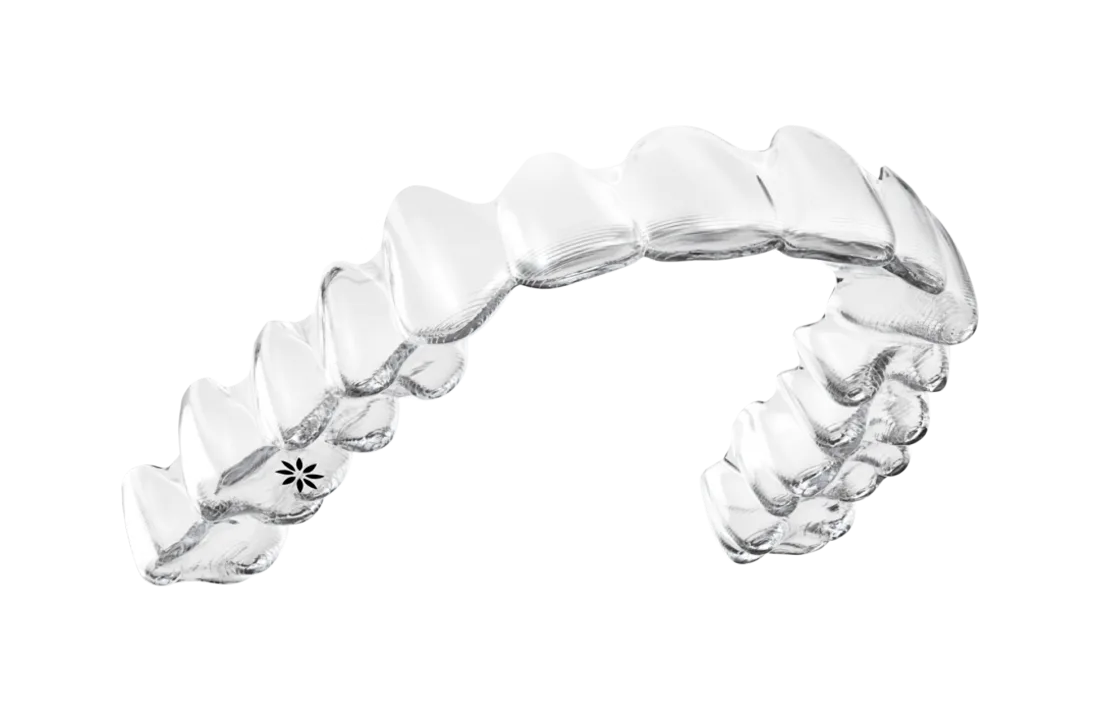
An aligner is a clear tray molded slightly out of step with your teeth. Seated, it presses particular teeth in a particular direction. Ours are Candid Pro. Most people know the category by the name Invisalign, a different system working the same way.
Trays come out to eat and brush, so nothing is off the menu. What they are genuinely not good at:
So we scan before quoting, adding a 3D cone beam CT where root position needs checking. If your case is on that list, we say so. More at clear aligners in Laguna Hills.
Wear time is the treatment. Aligners have to be in your mouth 20 to 22 hours a day. That leaves two to four hours out. Two disappear into breakfast, coffee and a slow dinner. Nothing decides the outcome more than that number. When wear time slips, the tray stops seating and the case falls behind.
We ask directly, and there is no wrong answer. If 20 hours a day is not going to happen, say so, and fixed braces become the better answer for you. For those we refer you to an orthodontist.
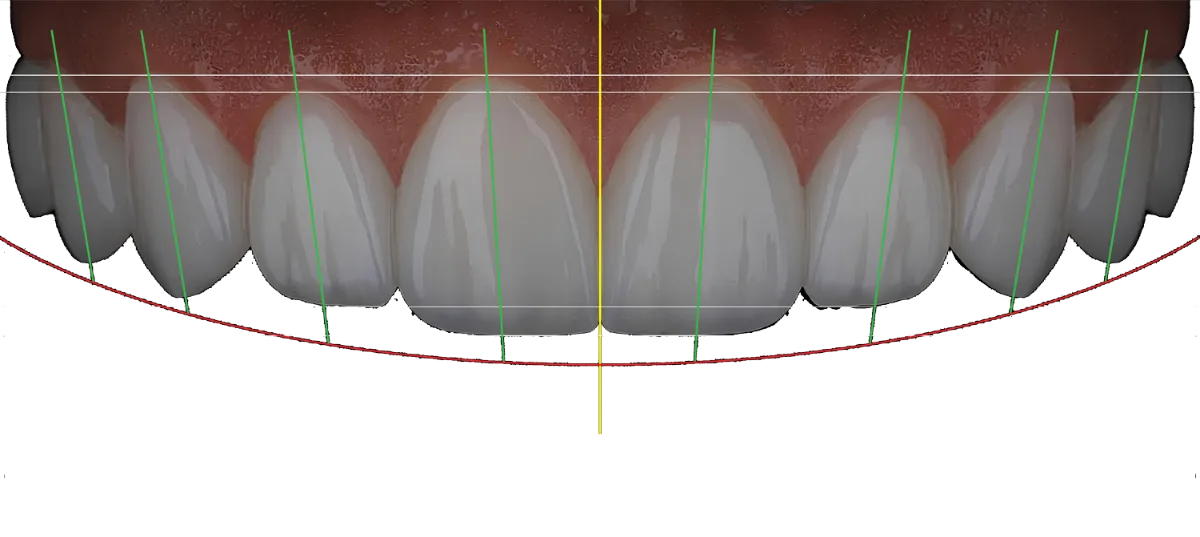
Attachments are small tooth-colored composite bumps bonded onto certain teeth. A tray alone slides off a smooth tooth, and the bump gives it a ridge to push against. Nothing is drilled. No anesthetic is needed, and they come off with a polish at the finish.
Interproximal reduction is enamel removal, and it should be called that. Crowded teeth need space from one of three places: an extraction, a wider arch, or IPR. IPR shaves a fraction of a millimeter at each contact.
Enamel does not grow back. So we work in tenths of a millimeter, only where the plan needs room. Your plan shows which contacts before anything starts.
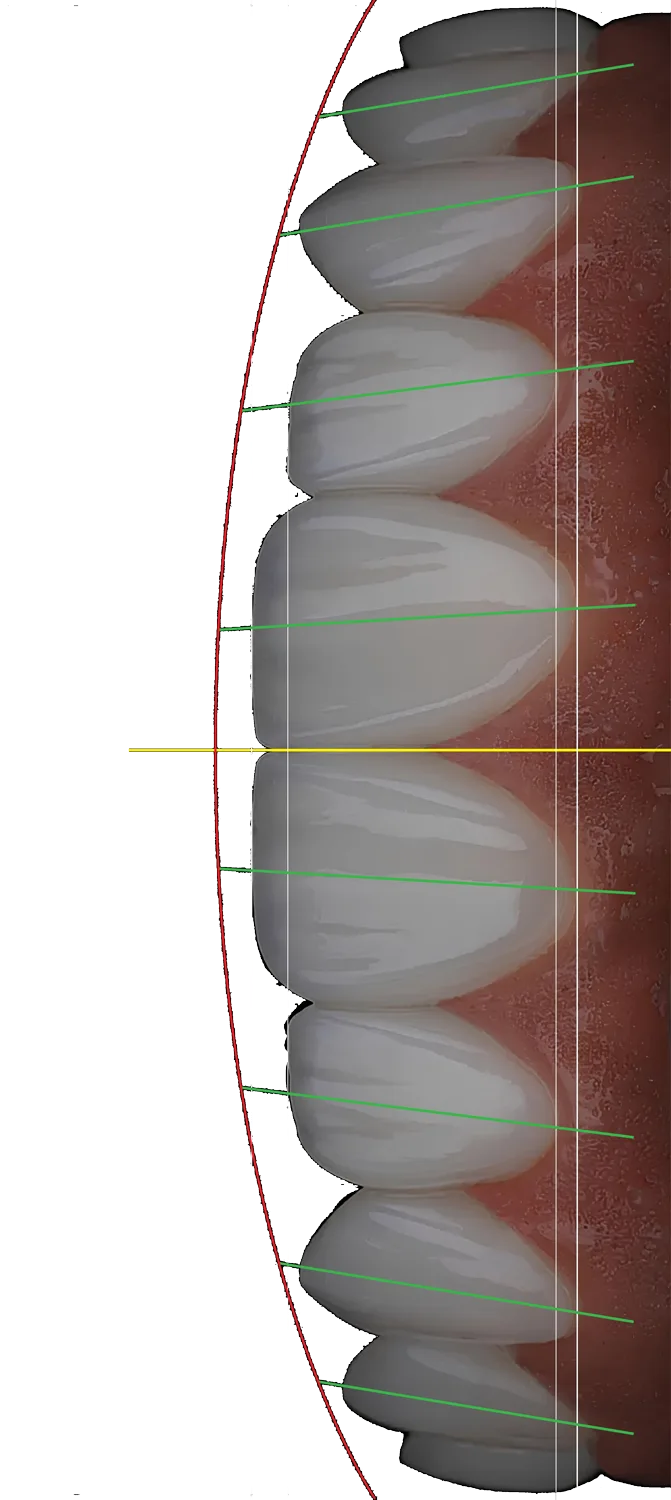
More adults come to us for this than for anything else in orthodontics. You had braces at 13, wore the retainer a while, and the lower front teeth closed up again.
Almost everybody stops wearing it. The retainer cracks, or stops fitting after a filling, or goes in a drawer during a move. Nobody here is going to make you feel bad about that.
It is not entirely down to you either. The fibers holding a tooth in bone are elastic. Some keep a memory of the old position for years. The same crowding shows up in adults who never had orthodontics at all. Adult jaws keep changing, so the finish line moves.
Wisdom teeth usually get the blame. The evidence is weak, and taking them out does not prevent lower crowding.
Now the useful part. Relapse cases are usually far smaller jobs than the original treatment. Two crowded lower incisors and one rotated upper tooth means short movements and few trays. Three to six months is common, against the two years your braces took.
We scan, say whether yours is a short case, and plan retention first.
Retention is indefinite. Wear one for as long as you want the result to hold. Not a sales line: it is the same biology that let them move.
Retainers crack, warp in hot cars, and get thrown out in napkins. Replacements are a running cost we quote for. We would far rather make a new one than straighten the same teeth twice.
Sometimes the deadline is short: a wedding in three months, crowded upper front teeth, and aligners would take a year.
Veneers are quicker, and they fix color at the same time, in four to eight weeks. The tradeoff is enamel. A veneer removes enamel from the front of a healthy tooth, and that is irreversible. That tooth needs a veneer or crown from then on.
Aligners are more conservative. They move the teeth you already have, and the front surfaces are never cut. The enamel taken in IPR is a fraction of a veneer preparation. They do nothing for color, and they take months.
So healthy teeth that are simply crooked are an aligner case, and we will say so. Teeth that are also chipped, worn or dark may need veneers doing several jobs at once. The two combine well: align, then KoR whitening, then fewer and thinner veneers. See porcelain veneers, smile makeover, or cosmetic dentistry.
Sometimes, and we will tell you when. An orthodontist is a dentist with extra years of training in tooth movement. Children whose jaws are still growing belong there, as do skeletal differences.
Pearl32 Dentistry and Wellness is a general practice with three general dentists, serving the community since 1994. Dr. Nojan Jahedmanesh, DDS, holds a dental degree from Loma Linda University and a certificate in prosthodontics from UCLA. He practices as a general dentist. The Laguna Woods Village resident bus stops in our plaza, and an elevator runs up to Suite 450.
The trays take a week or two to arrive. Any fillings or gum treatment come before that. Refinements add four to twelve weeks. These are ranges, not dates we can promise.
Candid Pro is quoted as one course of treatment, not tray by tray. How many trays the plan needs, and whether it treats one arch or both, moves the figure. So we quote after the scan, not over the phone. The written estimate itemizes the plan, trays, attachments, IPR, reviews and first retainers.
A PPO plan may include an orthodontic benefit, usually capped for life. We get your insurer’s answer in writing first. We take Delta Dental, Aetna, Cigna, MetLife, Guardian, Humana, Anthem Blue Cross, Blue Shield, UnitedHealthcare and other major PPO plans, and the Delta Dental, Guardian and MetLife HMO plans (full list). Cherry, CareCredit, Sunbit and Happen Bank finance orthodontic treatment, subject to credit approval: see dental financing. Our membership plans cover routine care.
General information, not a diagnosis. We treat adults from Laguna Hills, Laguna Niguel, Aliso Viejo, Lake Forest and across Orange County. Hours are on the contact page, and there is more on Laguna Woods.
Mostly Candid Pro. Invisalign remains available when it fits the case, and the dentist explains the choice after your scan. Both are clear removable aligners, made from a digital scan, changed every one to two weeks and worn about 22 hours a day. See Candid Pro and Invisalign compared.
No. Adults of any age can be treated when the gums and bone are healthy, and that is what we check at the scan appointment, not your age. Aligners are often used to close gaps that opened after tooth loss, or to line teeth up before crowns or implants. Retainers at night afterward are lifelong at any age. See clear aligners.